

METHODOLOGY FOR TRADERS & REFINERS
HOW WERE TRADERS & REFINERS ASSESSED?
Lorem ipsum dolor sit amet, consectetur adipiscing elit, sed do eiusmod tempor incididunt ut labore et dolore magna aliqua. Ut enim ad minim veniam, quis nostrud exercitation ullamco laboris nisi ut aliquip e
Lorem ipsum dolor sit amet, consectetur adipiscing elit, sed do eiusmod tempor incididunt ut labore et dolore magna aliqua. Ut enim ad minim veniam, quis nostrud exercitation ullamco laboris nisi ut aliquip ex ea commodo consequat. Duis aute irure dolor in reprehenderit in voluptate velit esse cillum dolore eu fugiat nulla pariatur. Excepteur sint occaecat cupidatat non proident, sunt in culpa qui officia deserunt mollit anim id est laborum
COMPANIES HQ’S
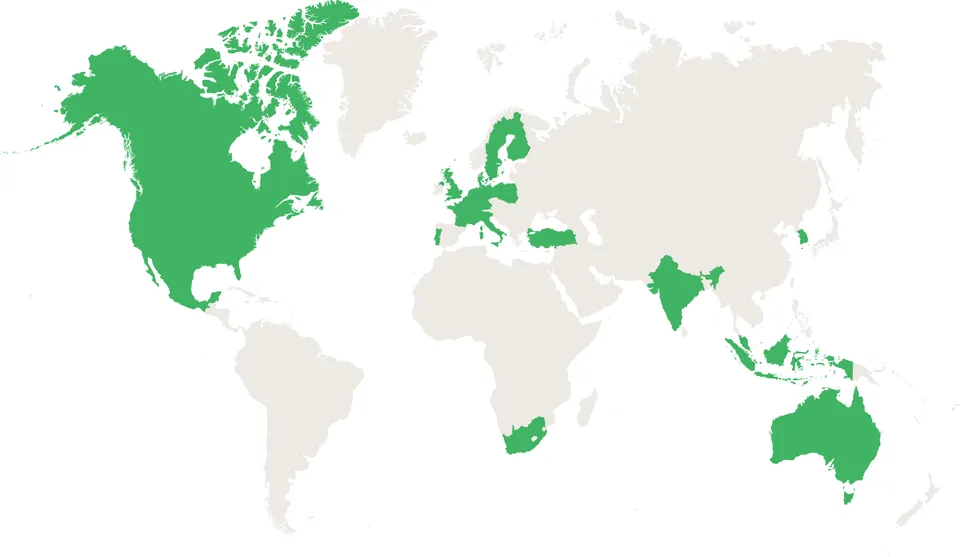
- 6companies HQ’S in North AmericaMexico, Canada, United States
- 3companies HQ’S in EuropeBelgium, Denmark, Finland, France, Germany, Italy, Netherlands, Poland, Portugal, Sweden, Switzerland, Turkey, United Kingdom
- 5companies HQ’S in AsiaIndia, Indonesia, Malaysia, Philippines, Singapore, South Korea
- 1companies HQ’S in AfricaSouth Africa
- 1companies HQ’S in AustraliaAustralia
WHAT DATA DID WE COLECT
Lorem ipsum dolor sit amet, consectetur adipiscing elit, sed do eiusmod tempor incididunt ut labore et dolore magna aliqua. Ut enim ad minim veniam, quis nostrud exercitation ullamco laboris nisi ut aliquip ex ea commodo consequat. Duis aute irure dolor in reprehenderit in voluptate velit esse cillum dolore eu fugiat nulla pariatur. Excepteur sint occaecat cupidatat non proident, sunt in culpa qui officia deserunt mollit anim id est laborum
Lorem ipsum dolor sit amet, consectetur adipiscing elit, sed do eiusmod tempor incididunt ut labore et dolore magna aliqua. Ut enim ad minim veniam, quis nostrud exercitation ullamco laboris nisi ut aliquip ex ea commodo consequat. Duis aute irure dolor in reprehenderit in voluptate velit esse cillum dolore eu fugiat nulla pariatur. Excepteur sint
RISK PROFILE CRITERIA
Lorem ipsum dolor sit amet, consectetur adipiscing elit, sed do eiusmod tempor incididunt ut labore et dolore magna aliqua. Ut enim ad minim veniam, quis nostrud exercitation ullamco laboris nisi ut aliquip ex ea commodo consequat.
COMPANY ENGAGED
Company engagement indicates a willingness to participate in the assessment process, review findings, and provide additional evidence or clarification where appropriate. While engagement does not necessarily reflect ESG performance, it can be an indicator of transparency, responsiveness, and commitment to stakeholder dialogue. Companies that engage may be more likely to address identified issues and improve their practices over time.
Score
- YESIf a company provided feedback on its draft assessment.
- NOIf a company DO NOT provide feedback on its draft assessment.
suspension or membership termination
As all assessed companies are RSPO members, identify where a company has been disassociated from the RSPO certification scheme, or currently has certificates suspended, due to a decision taken by the scheme’s complaints panel.
Score
- SUSPENDEDTERMINATEDIf a company is suspended or terminated member of RSPO
- ACTIVEIf a company is an active member of RSPO
MEDIA RISK
Company engagement indicates a willingness to participate in the assessment process, review findings, and provide additional evidence or clarification where appropriate. While engagement does not necessarily reflect ESG performance, it can be an indicator of transparency, responsiveness, and commitment to stakeholder dialogue. Companies that engage may be more likely to address identified issues and improve their practices over time.
Criteria
Recency
- Negative media since 1 Jan 20254 points
- Most recent negative media between 2023–20243 points
- Negative media before 2023 only2 points
- No negative media1 point
Frequency
- > X articles/allegations since 20214 points
- X–Y articles/allegations since 20213 points
- < X articles/allegations since 20212 points
- No negative articles since 20211 point
Severity
- One ESG theme only3 points
- Operational issues only (fires, permits, minor incidents, accidents)2 points
- No negative issues1 point
Response
- No response / denies allegations without evidence4 points
- Limited acknowledgement, no evidence of action3 points
- Responds publicly and commits to investigate2 points
- Evidence of remediation1 point
Score
- HIGH0 - 4
- MED5 - 11
- LOW12 - 16
GRIEVANCE RISK
Company engagement indicates a willingness to participate in the assessment process, review findings, and provide additional evidence or clarification where appropriate. While engagement does not necessarily reflect ESG performance, it can be an indicator of transparency, responsiveness, and commitment to stakeholder dialogue. Companies that engage may be more likely to address identified issues and improve their practices over time.
Criteria
Recency
- New grievance opened within the last 12 months4 points
- Most recent grievance opened 1–3 years ago3 points
- Most recent grievance older than 3 years2 points
- No grievances1 point
Frequency
- >5 grievances (open and closed)4 points
- 2–5 grievances (open and closed)3 points
- 1 grievance (open or closed)2 points
- No grievances (open or closed)1 point
Severity
- Grievance relates to severe ESG issues such as human rights abuses, Indigenous Peoples’ rights, illegal deforestation, or multiple material ESG issues (open and closed)4 points
- Grievance relates to a single material ESG issue (e.g. labour rights, environmental harm, governance failures).3 points
- Grievance relates primarily to procedural, certification, or compliance issues with limited evidence of significant harm.2 points
- No grievances (open or closed)1 point
Response
- Open grievance(s) with little or no evidence of engagement, repeated delays, or failure to cooperate with the RSPO process.4 points
- Open grievance(s) currently under investigation or in active mediation, with no findings or outcome yet.3 points
- Responds publicly and commits to investigate2 points
- Evidence of remediation1 point
Score
- HIGH0 - 4
- MED5 - 11
- LOW12 - 16
SCORING CRITERIA
Sustainability policy and leadership
5 points5% of total
1. Reports NDPE or sustainable palm sourcing policy/policies
Policy- 1 point: Yes The company has a clear commitment covering NDPE or sustainable palm sourcing policy/policies that applies to all relevant palm oil operations, sourcing and trading activities, including trading both with and without physical possession.
- 0.5 points: Partial Commitment only applies to some suppliers, operations, geographies or palm oil products; or the commitment is general/implicit and does not clearly cover the full scope of the indicator.
- 0 points: No No commitment.
2. Board-level responsibility for deforestation, conversion and human rights issues
PracticeDisabled if company is not publicly listed and does not have a board.
- 1 point: Yes One or more members of the board of directors have responsibility for deforestation, conversion and human rights-related issues.
- 0.5 points: Partial One or more members of the board have responsibility for either deforestation/conversion or human rights-related issues, but not both; or data are between two and five years old.
- 0 points: No No evidence of board-level responsibility for deforestation, conversion or human rights-related issues; data are over five years old; or information is undated.
3. Personnel dedicated to responsible sourcing programme
PracticeInput figure.
- 1 point: Yes The company reports the number of personnel, as FTEs, dedicated to implementing its responsible sourcing programme for palm oil. The disclosure covers personnel responsible for implementation across owned and third-party supply, where applicable, and includes activities such as implementation planning, risk assessment, supplier and/or smallholder engagement, monitoring, reporting, grievance follow-up, and progress tracking.
- 0.5 points: Partial The company reports some information on personnel or teams responsible for implementing its responsible sourcing programme, but does not provide the number of personnel as FTEs; or only provides a general team description, department name, governance structure, or list of responsibilities; or the scope is unclear; or data is between two and five years old.
- 0 points: No No data; or data is more than five years old; or data is undated.
4. Participation in landscape or jurisdictional initiatives in its current or potential palm sourcing areas
PracticeState the initiative(s), location(s), and nature of participation.
- 1 point: Yes The company provides evidence of active participation in, or substantive support for, a multi-stakeholder landscape or jurisdictional initiative in a current or potential palm oil sourcing area. Eligible activities may include financial or technical support, supplier or smallholder engagement, restoration, conservation, monitoring, improved land governance, or implementation of a jurisdictional action plan. Broader multi-commodity initiatives may qualify where their relevance to the company’s palm oil supply chain is clear. Membership, meeting attendance, general statements of support, or the purchase of independent smallholder credits do not qualify on their own.
- 0.5 points: Partial The company states that it participates in, supports, or recognises the importance of a landscape or jurisdictional initiative, but provides limited detail on the location, initiative, role, activities, outcomes, or relevance to its sourcing areas; or information is between two and five years old.
- 0 points: No No data; or data is more than five years old; or data is undated.
Definitions
FAO definition: Dealing with large-scale processes in an integrated and multidisciplinary manner, combining natural resources management with environmental and livelihood considerations.
N.B. Landscape and jurisdictional approach definition: https://accountability-framework.org/the-framework/topics/jurisdictional-approaches/5. Climate risks assessment available
Practice- 1 point: Yes Has conducted and published an assessment of climate-related risks including for example: actual and potential impacts of climate change on the company; metrics, targets and processes used to assess or manage climate risks; responsibilities. CDP Climate questionnaire can be accepted if publicly available and contains a comprehensive risk assessment as described above.
- 0.5 points: Partial Only the summary of the risk assessment is available; or limited information provided.
- 0 points: No No climate-related risks assessment or summary available.
N.B. See further information and guidance on conducting climate risk assessments on IFRS website (replaced TCFD) https://www.ifrs.org/issued-standards/ifrs-sustainability-standards-navigator/ifrs-s2-climate-related-disclosures/,TCFD website (https://assets.bbhub.io/company/sites/60/2021/10/FINAL-2017-TCFD-Report.pdf) and in FAO report (http://www.fao.org/3/a-i3383e.pdf)
N.B. CDP Climate questionnaires are not externally verified.
Traceability and supply-chain mapping
20 points20% of total
6. Number of refineries handling palm oil, palm kernel oil or their derivatives owned, managed or operated by the company
OrganizationInput number.
- 1 point: Yes Reports number of refineries owned, managed, or operated by the company. State in explanation if any other refineries in development.
- 0.5 points: Partial Data provided does not cover company's known scope of operations; or contradictory figures* are published from same time period (i.e. same year); or data between two and five years old.
- 0 points: No No data; or data over five years old; or undated.
*N.B. Contradictory figures are those which deviate from each other by more than 5%. For example, if the Annual Report states 5 refineries and the Sustainability Report states a figure which is 3 more or less, then these are deemed contradictory figures.
7. Reports total annual palm oil volume from company-owned, managed or operated refineries
OrganizationInput percentage.
- 1 point: Yes Reports the current volume of annual palm oil from company-owned, managed or operated refineries covering the company’s relevant palm oil operations and/or sourcing scope.
- 0.5 points: Partial Figure is provided but the scope is unclear; only covers part of the relevant operations/supply chain; uses inconsistent or contradictory figures; is only provided as a broad range; is difficult to calculate from the information provided; or data are between two and five years old.
- 0 points: No No data; data over five years old; or undated.
8. Number of direct third-party mill suppliers
OrganizationInput number.
- 1 point: Yes Reports the current number of direct third-party mill suppliers (Tier 1 mills), covering all palm oil sourced directly from third-party mills during the reporting year.
- 0.5 points: Partial Figure only covers part of the relevant scope; the basis for the figure is unclear; the number and/or percentage is incomplete, contradictory or difficult to calculate from the information provided; or data are between two and five years old.
- 0 points: No No data; data over five years old; or undated.
9. Reports total annual palm oil volume (or percentage) sourced directly from Tier 1 third-party palm oil mills
OrganizationInput percentage.
- 1 point: Yes Reports the current volume or percentage of annual palm oil volume sourced from direct Tier 1 third-party mill suppliers, with a clear numerator (volume sourced directly from third-party mills) and denominator (total annual palm oil volume sourced/handled by the company), covering the company’s relevant palm oil operations and/or sourcing scope.
- 0.5 points: Partial Number is provided but the numerator, denominator, reporting period or scope is unclear; only covers part of the relevant operations/supply chain; uses inconsistent or contradictory figures; is only provided as a broad range; is difficult to calculate from the information provided; or data are between two and five years old.
- 0 points: No No data; data over five years old; or undated.
10. Number of direct third-party kernel crusher suppliers
OrganizationInput number.
- 1 point: Yes Reports the current number of direct third-party kernel crusher suppliers (Tier 1 kernel crushers), covering all palm kernel oil or palm kernel expeller sourced directly from third-party kernel crushers during the reporting year.
- 0.5 points: Partial Figure only covers part of the relevant scope; the basis for the figure is unclear; the number and/or percentage is incomplete, contradictory or difficult to calculate from the information provided; or data are between two and five years old.
- 0 points: No No data; data over five years old; or undated.
11. Reports total annual palm oil volume (or percentage) sourced from direct third-party kernel crusher suppliers
OrganizationInput percentage.
- 1 point: Yes Reports the current number or percentage of annual palm oil volume from third-party kernel crushers, with a clear numerator (volume sourced from third-party kernel crusher suppliers) and denominator (total annual palm oil volume handled by the company), covering the company’s relevant palm oil operations and/or sourcing scope.
- 0.5 points: Partial Percentage is provided but the numerator, denominator, reporting period or scope is unclear; only covers part of the relevant operations/supply chain; uses inconsistent or contradictory figures; is only provided as a broad range; is difficult to calculate from the information provided; or data are between two and five years old.
- 0 points: No No data; data over five years old; or undated.
12. Number of direct third-party refinery suppliers
OrganizationInput number.
- 1 point: Yes Reports the current number of direct third-party refinery suppliers (Tier 1 refineries), covering all palm oil sourced directly from third-party refinery during the reporting year.
- 0.5 points: Partial Figure only covers part of the relevant scope; the basis for the figure is unclear; the number and/or percentage is incomplete, contradictory or difficult to calculate from the information provided; or data are between two and five years old.
- 0 points: No No data; data over five years old; or undated.
13. Number or percentage of total annual palm oil volume from traded volumes
OrganizationDisabled if company does not source traded volumes. Input number and/or percentage.
- 1 point: Yes Reports the current number or percentage of annual palm oil volume from traded volumes, with a clear numerator (volume bought from traders, on the high seas, at port or on the market) and denominator (total annual palm oil volume sourced/handled by the company), covering the company’s relevant palm oil operations and/or sourcing scope.
- 0.5 points: Partial Number or percentage is provided but the numerator, denominator, reporting period or scope is unclear; only covers part of the relevant operations/supply chain; uses inconsistent or contradictory figures; is only provided as a broad range; is difficult to calculate from the information provided; or data are between two and five years old.
- 0 points: No No data; data over five years old; or undated.
14. Proportion of traded palm oil volumes traded without physical possession
OrganizationDisable if no physical possession. Input percentage and/or volume.
Scope
For trading operations, this indicator assesses the proportion of the company’s total traded palm oil volumes where the company trades the product without taking physical possession. This should cover relevant palm oil products traded by the company and should be reported against the company’s total traded palm oil volume for the same reporting period.- 1 point: Yes The company reports the percentage or volume of traded palm oil that is traded without physical possession, and provides sufficient information to understand this in relation to its total traded palm oil volumes.
- 0.5 points: Partial The company reports that it undertakes trading without physical possession, but only provides limited or incomplete information on the associated volumes; or reporting only covers some products, trading entities or geographies.
- 0 points: No The company does not disclose whether it trades palm oil without physical possession; or does not report any associated volume or percentage.
N.B. Trading without physical possession refers to transactions where the company buys and sells palm oil or palm oil products without physically handling, storing or processing the product. Companies should clearly state what types of trading activities are included in the reported figure.
15. Full annual mill list for the mills in the company’s palm oil supply chain (owned and sourced from directly and indirectly)
Organization- 1 point: Yes Provides a full annual mill list for the palm oil supply chain, covering owned mills and mills sourced from directly and indirectly. The list should include mill name, parent/company group, country, GPS coordinates.
- 0.5 points: Partial Provides a annual mill list for the palm oil supply chain but it is incomplete; does not clearly cover owned mills and mills sourced from directly and indirectly; omits key identifying information; only covers direct suppliers; or data are between two and five years old.
- 0 points: No No list provided; data over five years old; or undated.
16. Full annual refinery list for the refineries in the company’s palm oil supply chain (owned and sourced from directly and indirectly)
Organization- 1 point: Yes Provides a full annual refinery list for the palm oil supply chain, covering owned refineries and refineries sourced from directly and indirectly. The list should include refinery name, parent/company group, country, GPS coordinates.
- 0.5 points: Partial Provides a annual refinery list for the palm oil supply chain but it is incomplete; does not clearly cover owned refineries and refineries sourced from directly and indirectly; omits key identifying information; only covers direct suppliers; or data are between two and five years old.
- 0 points: No No list provided; data over five years old; or undated.
17. Average volume of palm oil purchased from each geographical region per year (tonnes/%)
OrganizationInput number and/or percentage.
- 1 point: Yes Reports the number or percentage of palm oil purchased from each geographical region per year, with a clear numerator (volume grown/purchased in each region) and denominator (total annual palm oil volume purchased by the company).
- 0.5 points: Partial Number or percentage is provided but the numerator, denominator, reporting period or scope is unclear; only covers part of the relevant operations/supply chain; figures are approximate; or it is difficult to calculate from the information provided; or data are between two and five years old.
- 0 points: No No data; data over five years old; or undated.
18. Time-bound commitment to achieve 100% traceability to mill level
PolicyDisabled if only sources from own mills. Input target year.
- 1 point: Yes Time-bound commitment to 100% traceability to mill; or already 100% traceable (must have been reported within the last two years). Full points awarded if already 100% Identity Preserved. Must cover refining and trading operations.
- 0.5 points: Partial Commitment to less than 100% traceability; or commitment not time-bound; or in the past and not been met; or commitment does not cover all sourcing.
- 0 points: No Does not meet requirements for this indicator.
19. Time-bound commitment to achieve 100% traceability to plantation level
PolicyDisable if has no suppliers. Input target year.
- 1 point: Yes Time-bound commitment to 100% traceability to plantation (or 100% FFB traceability); or already 100% traceable (must have been reported within the last two years); or already 100% Identity Preserved. Must cover refining and trading operations.
- 0.5 points: Partial Commits to less than 100% traceability; or commitment not time-bound; or commitment in the past that has not been met; or unclear statement which does not specify plantation or farm level; or commitment does not cover all sourcing.
- 0 points: No Does not meet requirements for this indicator.
20. Percentage of supply traceable to mill level
PracticeScope
For downstream operations, overall percentage of palm oil supply (Crude Palm Oil (CPO) and Palm Kernel oil (PK)) traceable to mills. Must cover refining and trading operations.
No points are awarded if data is over two years old or undated.Scoring
Companies are awarded up to 1.0 point based on the percentage volume that is traceable to mill level (e.g. 0.4 points are awarded for companies that are 40% traceable to mill).- 1 point: Yes 100% traceable.
- 0.01-0.99 points: Partial 1-99% traceable.
- 0 points: No 0% traceable; or data over two years old; or undated.
21. Percentage of supply from third-party palm oil supply to refining and trading operations traceable to plantation level
PracticeScope
For refining and trading operations, the percentage of total third-party palm oil volume traceable to plantation level. This should cover directly and indirectly sourced CPO, PKO and other relevant palm oil volumes from mills, refineries, traders and intermediaries.Scoring
Companies are awarded up to 1.0 point based on the percentage sourced for refining and trading that is traceable to plantation level (e.g. 0.4 points are awarded for companies where 40% of total relevant third-party volumes is traceable to plantation level).- 1 point: Yes 100% traceable.
- 0.01-0.99 points: Partial 1-99% traceable.
- 0 points: No 0% traceable; or data over two years old; or undated.
22. Publishes traceability data at refinery level
Practice- 1 point: Yes The company publishes percentage of supply traceable to plantation level per company-owned refinery, for all refineries; or all refineries already 100% Identity Preserved.
- 0.5 points: Partial The company only publishes percentage of palm oil supply traceable to mill level; or publishes traceability to plantation level but not for all refineries; or publishes refinery-level NDPE IRF profiles that clearly cover each refinery’s full supply and allow the proportion linked to known supplying mills to be determined.
- 0 points: No No data.
23. Volume (or percentage) of palm oil supply from plots of 4 hectares or less with coordinate-level geolocation data
PracticeScope
Volume or percentage of relevant palm oil supply from plantations and/or smallholder plots of 4 hectares or less for which the company has at least coordinate-level geolocation data. This may include point coordinate data and/or polygon data, provided the data relates to plots of 4 hectares or less.Data should cover directly and indirectly sourced CPO, PKO and other relevant palm oil volumes sourced, refined, processed and/or traded by the company.
To avoid double-counting, volumes counted under this indicator should not also be counted under the polygon data indicator for plots over 4 hectares. Where plot size is not disclosed or cannot be determined, the relevant volume should not be counted under this indicator.
No points are awarded if data are over two years old or undated.
Scoring
Companies are awarded up to 1.0 point based on the percentage of relevant palm oil volumes from plots of 4 hectares or less for which at least coordinate-level geolocation data are available. For example, 0.4 points are awarded where coordinate-level geolocation data are available for 40% of relevant volumes from plots of 4 hectares or less.- 1 point: Yes At least coordinate-level geolocation data are available for 100% of relevant palm oil volumes.
- 0.01-0.99 points: Partial At least coordinate-level data are available for 1–99% of relevant palm oil volumes from plots under 4 hectares.
- 0 points: No At least coordinate-level are available for 0% of relevant palm oil volumes from plots under 4 hectares; or data are over two years old; or data are undated.
24. Volume (or percentage) of palm oil supply from plots over 4 hectares with polygon data
PracticeScope
Volume or percentage of relevant palm oil supply from plantations and/or smallholder plots over 4 hectares for which the company has polygon data. Data should cover directly and indirectly sourced CPO, PKO and other relevant palm oil volumes sourced, refined, processed and/or traded by the company.To avoid double-counting, volumes counted under this indicator should not also be counted under the coordinate-level geolocation data indicator for plots of 4 hectares or less. Where plot size is not disclosed or cannot be determined, the relevant volume should not be counted under this indicator.
No points are awarded if data are over two years old or undated.
Scoring
Companies are awarded up to 1.0 point based on the percentage of relevant palm oil volumes from plots over 4 hectares for which polygon data are available. For example, 0.4 points are awarded where polygon data are available for 40% of relevant volumes from plots over 4 hectares.- 1 point: Yes Polygon data are available for 100% of relevant palm oil volumes from plots over 4 hectares.
- 0.01-0.99 points: Partial Polygon data are available for 1–99% of relevant palm oil volumes from plots over 4 hectares.
- 0 points: No Polygon data are available for 0% of relevant palm oil volumes from plots over 4 hectares; or data are over two years old; or data are undated.
25. Percentage of palm oil supply covered by an NDPE IRF profile
PracticeScope
Percentage of total relevant palm oil volume sourced for refining and trading operations that is covered by an NDPE IRF profile. This may include profiles generated for supply sourced directly from mills and profiles received from upstream refineries, traders or other suppliers.No points are awarded if data is over two years old or undated.
Scoring
Companies are awarded up to 1.0 point based on the percentage of total relevant palm oil volume using the NDPE IRF framework for no deforestation and no peat. For example, 0.4 points are awarded where 40% of sourced volumes have been assessed.- 1 point: Yes Reports that 100% of sourced palm oil volume is covered by an NDPE IRF assessment and provides the resulting profile, showing the percentage classified within each IRF category for no deforestation and no peat.
- 0.01–0.99 points: Partial Reports that 1–99% of sourced volume is covered by an NDPE IRF assessment. Points are awarded proportionately. The company should also provide the resulting IRF profile.
- 0 points: No Reports 0%; provides no relevant data; or data are undated or more than two years old.
N.B. General statements that suppliers are assessed, monitored or engaged do not qualify unless the NDPE IRF is explicitly referenced.
Certification standards
8 points8% of total
26. Member of the Roundtable on Sustainable Palm Oil (RSPO)
OrganizationInput year the company became a member.
- 1 point: Yes Whole company/group is a member of RSPO, or subsidiary membership covers all palm oil operations.
- 0.5 points: Partial Only subsidiary/subsidiaries are members.
- 0 points: No Neither company nor any of its oil palm subsidiaries are members; or RSPO membership is currently suspended (if company is suspended from the RSPO, still assess against RSPO indicators).
NB: External verification must be determined through listing on RSPO membership webpage.
External source: https://rspo.org/members/all27. Certified under voluntary sustainability certification scheme (e.g. ISCC, SAN, RSB)
Organization- 1 point: Yes Any of the company's palm oil operations certified under voluntary schemes, including ISCC, SAN, RSB, and organic certification.
- 0.5 points: Partial Only ISO 14001 certified; or audited, but not yet clearly certified.
- 0 points: No Member of scheme/s, but not yet certified or audited.
External sources:
ISCC: https://www.iscc-system.org/certificates/all-certificates/
Sustainable Agriculture Standard: https://www.rainforest-alliance.org/business/solutions/certification/agriculture/certificate-search-public-summaries/
RSB: https://rsb.org/certification/participating-operators/28. Time-bound plan for achieving 100% RSPO certification of palm oil volumes sourced
PolicyInput year.
- 1 point: Yes Target to achieve RSPO certification of 100% of palm oil volumes sourced, refined and traded by the company within five years; or target already met, reported within the last two years. Commitment must clearly cover all traded volumes and third-party sourced volumes where relevant.
- 0.5 points: Partial Target to achieve RSPO certification of 100% of palm oil volumes, but target date is more than five years away; or target applies to less than 100% of palm oil volumes; or target only applies to supply from own operations or it is unclear whether traded volumes and third-party sourced volumes are included; or only subsidiary is an RSPO member and target is within five years or already met.
- 0 points: No Does not meet requirements for this indicator.
External source: RSPO P&T ACOP 3.4 Year expected to only source RSPO-certified palm oil and oil palm products.
29. Time-bound plan for achieving 100% RSPO certification of all palm product processing facilities within 5 years
PracticeInput year.
- 1 point: Yes Target within five years or already met.
- 0.5 points: Partial Only subsidiary is an RSPO member, and target within five years or already met.
- 0 points: No Does not meet requirements for this indicator.
External source: RSPO P&T ACOP 3.3 Which year did your company achieve (or expects to achieve) 100% RSPO certification of all palm product processing facilities?
30. Submitted most recent RSPO Annual Communication of Progress (ACOP)
PracticeDisabled if company joined RSPO within the year and does not have to submit an ACOP.
- 1 point: Yes Submitted last ACOP.
- 0.5 points: Partial Only a subsidiary is a member and has submitted its most recent ACOP.
- 0 points: No ACOP not submitted (if company is suspended from the RSPO, indicator still assessed).
External source: https://rspo.org/members/acop
31. Percentage of all palm oil and oil palm products handled/traded/processed (tonnes) that is RSPO-certified
PracticeScoring
Companies are awarded up to 1.0 point based on the percentage of all palm oil and oil palm products handled/traded/processed that are RSPO certified (i.e. 0.4 points are awarded for companies that have 40% of all palm oil and oil palm products handled/traded/processed that are RSPO certified).- 1 point: Yes 100% certified.
- 0.01-0.99 points: Partial 1-99% certified.
- 0 points: No 0% certified; or data over two years old; or undated.
External source: RSPO P&T 2.4 According to the volume information you have provided in Question PT.2.2 and Question PT.2.3, your company's certified palm oil, palm kernel oil and related products uptake is:
32. Processes/trades RSPO-certified palm oil through Segregated or Identity Preserved supply chains
PracticeScope
No points are awarded if data is over two years old or undated.Scoring
Companies are awarded up to 1.0 point based on the percentage of CSPO, CSPKO, or CSPKE sourced as Segregated and/or Identity Preserved (e.g. 0.4 points are awarded for companies that source 40% SG/IP).- 1 point: Yes 100% SG/IP
- 0.01-0.99 points: Partial 1-99% SG/IP.
- 0 points: No 0% SG/IP.
External source: RSPO P&T ACOP: 2.3.Volume of RSPO-certified palm oil and oil palm products sourced in the year(tonnes) ((Identity Preserved/Segregated); 2.3 Volume of RSPO-certified palm oil, palm kernel oil and related products sourced in the year (tonnes): Total
33. Annual increase or decrease in RSPO CSPO volumes purchased
PracticeInput percentage increase or decrease. If 100% of palm oil and palm kernel oil volumes sourced are already CSPO, state in answer.
- 1 point: Yes Company reports an increase of at least 2 percentage points in CSPO volumes purchased in the reporting year compared with the previous year; or reports that 100% of relevant palm oil and palm kernel oil volumes sourced are already CSPO.
- 0.5 points: Partial Company reports an increase in CSPO volumes purchased, but the increase is less than 2 percentage points; or it is unclear whether figures cover all relevant palm oil and palm kernel oil volumes sourced by the company.
- 0 points: No No data; or CSPO volumes decreased; or CSPO volumes stayed the same and the company has not already reached 100% CSPO; or data are undated.
N.B. This indicator is based on RSPO Shared Responsibility guidance for processors and traders to increase global CSPO uptake by 2 percentage points each year.
External source: RSPO Shared Responsibility guidance: https://rspo.org/wp-content/uploads/sr-requirements-and-implementation-31-october-2019.pdf
Deforestation, conversion and biodiversity
15 points15% of total
34. Commitment to zero deforestation applies to all suppliers
PolicyState commitment in explanation.
- 1 point: Yes Company specifies commitment to "no/zero gross deforestation" or equivalent wording which clearly covers HCV, HCS and peatland, and/or uses the AFI/FAO definition of forest and applies to all suppliers; commitment must be in place as of 1st Jan 2020; or has commitment to zero conversion (scored full points in indicator 35) which applies to all suppliers.
- 0.5 points: Partial Company specifies has no/zero NET deforestation (acknowledges that some forest loss could be offset by forest restoration such as through purchasing REDD+, offsets or mitigation banking) which applies to all suppliers; or has unclear no deforestation commitment which applies to all suppliers, or zero deforestation commitment only applies to some suppliers or commitment made after 1st Jan 2020.
- 0 points: No Does not meet requirements for this indicator. Company has no commitment to reducing deforestation.
N.B. Commitments made through outside initiatives are acceptable, but must meet the requirements of the indicator.
AFI/FAO definition of 'forest': https://accountability-framework.org/the-accountability-framework/definitions/forest/35. Commitment to zero conversion of natural ecosystems applies to all suppliers
Policy- 1 point: Yes Company specifies a commitment to "no/zero conversion" that explicitly includes all natural ecosystems and applies to all suppliers.
- 0.5 points: Partial Company specifies has no/zero NET conversion (acknowledges that some conversion could be offset by ecosystem restoration such as through purchasing REDD+, offsets or mitigation banking) which applies to all suppliers; or unclear commitment; or commitment does not cover all natural ecosystems; or does not cover all suppliers.
- 0 points: No Company has no commitment to zero conversion.
N.B. No points are available for a commitment to no deforestation or protecting HCV and HCS areas, as these commitments are covered elsewhere.
AFI definition of 'conversion' and 'natural ecosystems': https://accountability-framework.org/the-framework/contents/definitions/36. Criteria and cut-off date for defining deforestation and/or ecosystem conversion in supplier operations
PolicyState criteria and cut-off date in explanation.
For deforestation, the cut-off date must be 1st January 2020 or earlier.- 1 point: Yes Specifies the criteria or types of forest/areas that are not to be deforested/converted by suppliers (e.g. primary forests, Intact Forest Landscapes (IFLs), secondary forests, disturbed forests, HCS areas, HCV areas, etc.) and specifies a cut-off date beyond which deforestation or conversion would not be accepted in supplier operations.
- 0.5 points: Partial Only specifies the criteria/types of forests/areas that are not to be deforested or converted; or only specifies a cut-off date; or only applies to some suppliers.
- 0 points: No Does not meet requirements for this indicator; or no commitment to no deforestation (see indicator 34).
AFi definition of 'cutoff date': https://accountability-framework.org/the-accountability-framework/definitions/cutoff-date/
N.B. AFi operational guidance on cut-off dates https://accountability-framework.org/fileadmin/uploads/afi/Documents/Operational_Guidance/AFi_Operational_Guidance_-_Cutoff_Dates__Sept_2023_.pdf37. Commitment to restoration of deforestation/conversion in supplier operations since cut-off date
Policy- 1 point: Yes Commitment to restore ecosystems and their values to their prior condition and/or provide suitable compensation to restore these values in the case of deforestation or conversion applies to all suppliers. Commitment must specify a cut-off date beyond which deforestation or conversion would not be accepted and must include all deforestation/conversion (i.e. not only restoration of HCVs without prior HCV assessment, as per RSPO Remediation and Compensation procedure).
- 0.5 points: Partial Unclear commitment; or does not include a cut-off date; or commitment only applies to some suppliers; or commitment does not cover all aspects of deforestation or conversion.
- 0 points: No Does not meet requirements for this indicator.
38. Cross-commodity zero deforestation and conversion commitment applies to all suppliers
PolicyDisable if company does not source or purchase any other forest-risk commodities beyond palm oil.
- 1 point: Yes Company specifies a company-wide commitment to "no/zero gross deforestation and conversion" or uses equivalent language which clearly applies to all supplier and covers HCV, HCS and peatland, and/or uses the AFI/FAO definition of forest, that applies to at least all high risk commodities that company has operations in e.g. cattle, cocoa, coffee, rubber, soy, timber and pulp. Commitment must be in place as of 1st Jan 2020.
- 0.5 points: Partial Commitment to no/zero deforestation only; commitment covers more than just palm but not all relevant commodities; or only has no/zero NET deforestation/conversion (acknowledges that some forest loss could be offset by forest restoration such as through purchasing REDD+, offsets or mitigation banking); or has unclear commitment; or commitment only applies to some suppliers; or commitment made after 1st Jan 2020.
- 0 points: No Commitment only covers palm operations; or does not meet requirements for this indicator; or no commitment to reducing deforestation.
N.B. Commitments made through outside initiatives are acceptable, but must meet the requirements of the indicator.
AFi/FAO definition of 'forest': https://accountability-framework.org/the-accountability-framework/definitions/forest/39. Target date to achieve zero deforestation in supplier operations
PolicyInput year.
- 1 point: Yes Company has set a target date to achieve zero deforestation across all supplier operations by 2026, or already achieved.
- 0.5 points: Partial Company has set time-bound target between 2027 and 2031; commitment does not clearly cover all suppliers; or unclear commitment.
- 0 points: No No time-bound target for achieving zero deforestation.
AFi definition of 'target date': https://accountability-framework.org/the-accountability-framework/definitions/target-date/
40. Target date to achieve zero conversion in supplier operations
PolicyInput year.
- 1 point: Yes Company has set a target date to achieve zero conversion across all supplier operations by 2026, or already achieved.
- 0.5 points: Partial Company has set time-bound target between 2027 and 2031; commitment does not clearly cover all suppliers; or unclear commitment.
- 0 points: No No time-bound target for achieving zero conversion.
AFi definition of 'target date': https://accountability-framework.org/the-accountability-framework/definitions/target-date/
41. Evidence of monitoring deforestation and/or ecosystem conversion in supplier operations
Organization- 1 point: Yes Specifies how deforestation and/or ecosystem conversion is being monitored (i.e. how monitoring encroachment), including the extent of the area monitored and timeframe. Look for references to spatial monitoring, encroachment, patrols, satellite data, drones, GIS, etc.
- 0.5 points: Partial Methodology, extent of area being monitored for deforestation and/or ecosystem conversion, and/or time-frame is unclear; or data between two and five years old.
- 0 points: No No data; data over five years old; or undated.
N.B.(1) This indicator focuses on all deforestation/conversion that occurs in a suppliers operational area committed either by itself or by third parties.
N.B.(2) Monitoring data can be obtained from suppliers, and does not necessarily need to be conducted by the company itself. The area assessed does not need to cover all supplier operations.42. Amount of deforestation and/or ecosystem conversion recorded in supplier operations since cut-off date
Organization- 1 point: Yes Reports total area (i.e. ha or km2) of deforestation and/or ecosystem conversion recorded within the company's suppliers' operational area (area can be zero) since the commitment cut-off date in the operations of the company's direct or indirect suppliers (see indicator 36). Information must be in one or two places rather than spread in multiple places.
- 0.5 points: Partial Data reported does not cover all suppliers' entire operational area; or area figures found under grievances but consolidated figure covering entire operations not reported; or no cut-off date given; or not reported since cut-off date; or data between two and five years old.
- 0 points: No No data; or data over five years old; or undated.
N.B. Monitoring data can be obtained from suppliers, and does not necessarily need to be conducted by the company itself. This indicator focuses on all deforestation/ecosystem conversion that occurs in a supplier's operational area committed either by itself or by third parties. The area assessed does not need to cover all supplier operations.
43. Risk assessment related to deforestation and conversion risk in its supply chain
Practice- 1 point: Yes Has conducted and published an assessment of both deforestation and conversion risk in its supply chain.
- 0.5 points: Partial Only the summary of the risk assessment is available; only covers deforestation or conversion; or limited information provided; or assessment is between two and five years old.
- 0 points: No No supply chain deforestation and conversion risk assessment or summary available; or data are over five years old; or information is undated.
N.B.(1) The risk assessment does not need to be repeated in full each year, but companies should explain how it is reviewed or updated in response to changes in sourcing, suppliers, geographies, traceability coverage, grievances, deforestation alerts or other relevant risk factors.
N.B (2). An NDPE IRF profile does not qualify as a deforestation and conversion risk assessment on its own. It may be accepted as supporting evidence where the company also publishes an assessment or summary identifying deforestation and ecosystem-conversion risks within its supply chain.44. Reports total volumes (or percentages) sourced by the company for which deforestation and conversion risk has been assessed
PracticeInput percentage and/or volume.
Scope
For downstream operations, this indicator assesses the volume or percentage of palm oil supply for which the company has assessed deforestation and/or ecosystem conversion risk. Reporting should cover CPO, PKO and other relevant palm oil volumes sourced, refined, processed and/or traded by the company, including directly and indirectly sourced volumes where relevant.No points are awarded if data are over two years old or undated.
Scoring
Companies are awarded up to 1.0 point based on the percentage of relevant palm oil volume assessed for deforestation and/or ecosystem conversion risk. For example, 0.4 points are awarded where 40% of relevant palm oil volumes have been assessed.- 1 point: Yes 100% of relevant palm oil volumes have been assessed for deforestation and/or ecosystem conversion risk.
- 0.01–0.99 points: Partial 1–99% of relevant palm oil volumes have been assessed for deforestation and/or ecosystem conversion risk.
- 0 points: No 0% of relevant palm oil volumes have been assessed; or no data; or data are over two years old; or data are undated.
45. Methodology for assessing deforestation- and conversion-free volumes
PracticeState methodology and link in explanation, where available.
- 1 point: Yes The company states the methodology or framework it uses to assess and report deforestation- and conversion-free volumes. This includes the NDPE Implementation Reporting Framework, or another clearly defined methodology that enables volumes to be assessed against deforestation- and conversion-free requirements. If the company uses the NDPE Implementation Reporting Framework, it provides a link to its IRF profile or published IRF results. For other methodologies, the company provides a link or clear reference to the methodology or published results.
- 0.5 points: Partial The company reports using a methodology, framework or process to assess deforestation- and conversion-free volumes, but does not clearly name it; or it names the methodology but does not provide a link or reference to the relevant profile, methodology or results; or the methodology only covers some relevant suppliers, commodities or volumes; or the methodology is not clearly linked to deforestation- and conversion-free volume reporting.
- 0 points: No Does not meet requirements for this indicator.
46. Proportion of supply from own operations and third-party suppliers that is verified as deforestation- and/or conversion-free (DCF)
Practice- 1 point: Yes Reports the proportion of palm oil and palm kernel oil supply, including volumes sourced, refined, processed and/or traded by the company, that is verified as DCF. Reporting should cover 100% of relevant direct and indirect volumes, including third-party sourced and traded volumes where relevant, and include the proportion not known to be DCF. Note, only partial points can be awarded if the proportion of DCF volumes is based on self-assessment only.
- 0.5 points: Partial Only reports some of this information; or reporting only covers selected products, refineries, suppliers, origins or certified volumes; or it is unclear whether third-party sourced and traded volumes are included; or the proportion of verified DCF volumes is based on self-assessment only; or data are between two and five years old.
- 0 points: No No data; or data over five years old; or undated.
N.B. NDPE IRF reporting can be accepted here if the content meets the scoring criteria.
AFi DCF guidance: https://accountability-framework.org/news-events/news/deforestation-and-conversion-free-supply-chains-and-land-use-change-emissions-a-guide-to-aligning-corporate-targets-accounting-and-disclosure/47. Response process for deforestation and conversion alerts
Practice- 1 point: Yes The company has a documented process to respond to potential forest loss, deforestation and/or ecosystem conversion alerts in its palm oil supply chain. The process is aligned with the MRF, or an equivalent structured process, and includes steps for screening alerts, assessing supply chain links, investigating cases, engaging suppliers, defining corrective actions or time-bound action plans, escalating unresolved cases, suspending or excluding non-compliant suppliers where necessary, and monitoring progress or resolution.
- 0.5 points: Partial The company reports some information on how it responds to forest loss, deforestation and/or ecosystem conversion alerts, but the process is incomplete; or it does not clearly cover third-party suppliers; or it does not explain how alerts are investigated, escalated, or followed up; or it refers to the MRF or another process without providing sufficient evidence of implementation.
- 0 points: No Does not meet requirements for this indicator.
External source: Deforestation Monitoring and Response Framework (MRF) guidance https://www.theconsumergoodsforum.com/wp-content/uploads/2026/04/CGF-Forest-Positive-Palm-Oil-Monitoring-Response-Framework.pdf
48. Commitment to no hunting or only sustainable hunting of species applies to all suppliers
Policy- 1 point: Yes Commitment to no hunting of all species or only sustainable hunting by local communities for subsistence purposes that does not cause decline of local species populations applies to all suppliers.
- 0.5 points: Partial Unclear commitment; or only no hunting of endangered, rare, threatened species; or no hunting only applies to certain extent of operations (e.g. no hunting only in conservation set-asides); or only no illegal hunting/poaching; or commitment only applies to some suppliers.
- 0 points: No No commitment or company allows employees to hunt.
HCV, HCS and impact assessments
3 points3% of total
49. Commitment to the use of the HCS approach applies to all suppliers
Policy- 1 point: Yes Commitment to apply the HCS Approach, as defined by the HCS Approach Toolkit, applies to all suppliers.
- 0.5 points: Partial Unclear commitment; or not clearly the HCS Approach, but another high carbon stock assessment methodology; or commitment only applies to some suppliers.
- 0 points: No Does not meet requirements for this indicator.
50. Commitment to the use of the HCV approach applies to all suppliers
Policy- 1 point: Yes Commitment to apply the HCV Approach, as defined by the HCVN, applies to all suppliers.
- 0.5 points: Partial Unclear commitment; or not clearly the HCV Approach, but another high carbon value assessment methodology; or commitment only applies to some suppliers.
- 0 points: No Does not meet requirements for this indicator.
51. Commitment to conduct social and environmental impact assessments (SEIAs) applies to all suppliers
Policy- 1 point: Yes Commitment to conduct SEIAs (or both EIA and SIAs) applies to all suppliers. Local equivalents are acceptable: e.g. AMDALs as EIA in Indonesia.
- 0.5 points: Partial Unclear commitment; or only mentions EIA/AMDAL or SIA; or commitment only applies to some suppliers.
- 0 points: No Does not meet requirements for this indicator.
Peat, fire and GHG emissions
13 points13% of total
52. Commitment to no planting on peat of any depth applies to all suppliers
Policy- 1 point: Yes Clear commitment to no planting on peat applies to all suppliers, clearly specifying for all depths of peatland or all peatland as defined using a recognised definition (e.g. RSPO definition).
- 0.5 points: Partial Unclear commitment; or only certain depths or certain peatlands; or commitment only applies to some suppliers.
- 0 points: No Does not meet requirements for this indicator.
N.B. RSPO peat definition - https://rspo.org/news-and-events/announcements/rspo-organic-and-peat-soil-classification
53. Commitment to best management practices for soils and peat applies to all suppliers
Policy- 1 point: Yes Commitment to best management practices (BMPs)/good agricultural practices (GAP) for soils AND peat (or only soils if clearly states no peat in any operations) applies to all suppliers. For example, not degrading, reducing compaction, no erosion, or conserving soils. Must be a full commitment to best practice, not just a limited selection of practices (e.g. a simple statement on preventing erosion).
- 0.5 points: Partial Unclear commitment; or only commits to BMPs for soils or peat; or commits to a limited selection of practices for both soils AND peat; or commitment only applies to some suppliers.
- 0 points: No No commitment; or only covers a limited selection of practices for soil OR peat.
54. Commitment to zero burning applies to all suppliers
Policy- 1 point: Yes Clear commitment to no or zero burning applies to all suppliers.
- 0.5 points: Partial Unclear commitment; or commitment only applies to some suppliers.
- 0 points: No Does not meet requirements for this indicator.
55. Time-bound commitment to reduce absolute greenhouse gas (GHG) emissions
PolicyInput year and figure.
- 1 point: Yes Commitment must clearly cover all palm operations (although this can be as part of an aggregate figure across other commodities). Time-bound commitment to reduce absolute GHG emissions, which explicitly includes AT LEAST scope 1 and scope 2 emissions (can be combined), by a specified amount and to be reached by a specified year and against a specified baseline (i.e. by X by YYYY from a YYYY baseline); or time-bound commitment already met (must have been reported within the last two years).
- 0.5 points: Partial Unclear commitment; or commitment clearly does not cover all palm oil operations e.g. only applies to transport emissions; or has target to reduce GHGs but not time-bound; or time-bound but no target (e.g. plan to reduce GHGs by 2030 but does not say how much by);or target to reach net-zero/carbon neutrality without reporting reduction from sequestration/removals separately; or target does not include at least scope 1 and scope 2 emissions.
- 0 points: No No target; or vague commitment to reduce general emissions or GHG emissions.
N.B. (1) State in description if company's target is verified by the Science Based Targets initiative (SBTi)
N.B. (2) Figure should be reported for company's most downstream operations, this includes plantations, mills, refineries and traders with physical possession.56. Absolute GHG emissions
PolicyInput figure.
- 1 point: Yes Figures must be specific to palm oil operations. Reports GHG absolute emission figures. Figures must explicitly include AT LEAST scope 1 and scope 2 emissions (can be combined); or if overall emission figures are reported including sequestration then emission and sequestration figures are clearly separated.
- 0.5 points: Partial Not clear figures relate to palm oil operations; or does not cover whole scope of palm oil operations e.g. only report transport emissions; or emission and sequestration figures are not separated (or it is not clear whether they are separated); or figures do not clearly include at least scope 1 and scope 2 emissions; or data between two and five years old.
- 0 points: No No data; or data over five years old; or undated.
N.B. (1) Information from CDP Climate Change questionnaire section C6.10 can be used if questionnaire published on company website.
N.B. (2) Figure should be reported for company's most downstream operations, this includes plantations, mills, refineries and traders with physical possession.57. Progress towards commitment to reduce absolute GHG emissions
Policy- 1 point: Yes Figures must be specific to palm oil operations. Reports a reduction in absolute GHG emissions from previous year or has already met target. Data must be reported every two years as a minimum and most recent figure must be within last two years. Most recent figures must explicitly include AT LEAST scope 1 and scope 2 emissions (can be combined).
- 0.5 points: Partial Figure has not improved from previous year; or emission and sequestration figures are not separated; or figures only include palm oil operations as part of aggregate figure; or does not cover all palm oil operations; or does not cover whole scope of palm oil operations e.g. only report transport emissions; or emission and sequestration figures are not separated (or it is not clear whether they are separated); or figures do not explicitly include AT LEAST scope 1 and scope 2 emissions; or most recent data between two and five years old.
- 0 points: No No data; or data over five years old; or undated.
58. Time-bound commitment to reduce greenhouse gas (GHG) emissions intensity
PolicyInput year and figure.
- 1 point: Yes Commitment must clearly cover all palm operations (although this can be as part of an aggregate figure across other commodities). Time-bound commitment to reduce GHG intensity, which explicitly includes AT LEAST scope 1 and scope 2 emissions (can be combined), by a specified amount and to be reached by a specified year and against a specified baseline (i.e. by X% by YYYY from a YYYY baseline); or time-bound commitment already met (must have been reported within the last two years).
- 0.5 points: Partial Unclear commitment; or commitment clearly does not cover all palm oil operations e.g. only applies to transport emissions; or has target to reduce GHG intensity but not time-bound; or time-bound but no target (e.g. plan to reduce GHGs by 2026 but does not say how much by); or target does not include at least scope 1 and scope 2 emissions.
- 0 points: No No target; or vague commitment to reduce general emissions or GHG emissions; or target is not intensity-based; or target to reach net-zero/carbon neutrality.
59. GHG emissions intensity
PracticeInput figure.
- 1 point: Yes Figures must be specific to palm oil refining and trading operations. Reports GHG emission intensity figures for the company’s relevant downstream palm oil operations, such as emissions per tonne of palm oil product refined, processed, handled or traded. Figures must explicitly include at least Scope 1 and Scope 2 emissions for refining and trading operations, which can be reported separately or combined. If overall emission intensity figures are reported including sequestration/removals, emissions and sequestration/removals must be clearly separated.
- 0.5 points: Partial Not clear figures relate to refining and trading operations; or does not cover whole scope of palm oil operations e.g. only report transport emissions; or emission and sequestration figures are not separated (or it is not clear whether they are separated); or figures reported as intensity for sales (e.g. tCO2e/$million); or figures do not clearly include at least scope 1 and scope 2 emissions; or data between two and five years old.
- 0 points: No No data; or data over five years old; or undated.
N.B. Information from CDP Climate Change questionnaire section C6.10 can be used if questionnaire published on company website.
60. Progress towards commitment to reduce GHG emissions intensity
Practice- 1 point: Yes Figures must be specific to palm oil operations. Reports a reduction in GHG intensity (i.e. CO2e per tonne of product) from previous year or has already met target. Data must be reported every two years as a minimum and most recent figure must be within last two years. Most recent figures must explicitly include AT LEAST scope 1 and scope 2 emissions (can be combined).
- 0.5 points: Partial Reports figures on GHG intensity but intensity figure has not improved from previous year; or figures reported as intensity for sales (e.g. m³ / $million); or emission and sequestration figures are not separated; or figures only include palm oil operations as part of aggregate figure; or does not cover all palm oil operations; or does not cover whole scope of palm oil operations e.g. only report transport emissions; or figures do not explicitly include AT LEAST scope 1 and scope 2 emissions; or most recent data between two and five years old.
- 0 points: No No data; or data over five years old; or undated; or provides data but not reporting in intensity and not improving.
61. Time-bound commitment or target to reduce GHG emissions from land-use change in the supply chain (Scope 3)
Policy- 1 point: Yes Commitment must clearly cover the company’s palm oil supply chain, including Scope 3 land-use change emissions associated with palm oil sourcing/suppliers. Time-bound commitment to reduce absolute GHG emissions from land-use change in the palm oil supply chain by a specified amount and to be reached by a specified year and against a specified baseline (i.e. by X by YYYY from a YYYY baseline); or time-bound commitment already met (must have been reported within the last two years). Palm oil may be included as part of an aggregate figure across other commodities, provided it is clear that palm oil Scope 3 land-use change emissions are included.
- 0.5 points: Partial Unclear commitment; or commitment is not clearly specific to palm oil; or commitment only covers some suppliers or sourcing volumes; or target refers to Scope 3 emissions, supply-chain emissions, deforestation-related emissions, FLAG emissions, or land-use change emissions, but it is not clear that palm oil land-use change emissions are included; or has target to reduce GHGs but not time-bound; or time-bound but no target (e.g. plan to reduce GHGs by 2025 but does not say how much by); or target to reach net-zero/carbon neutrality without reporting reduction from sequestration/removals separately.
- 0 points: No No target; or vague commitment to reduce general emissions or GHG emissions; or target does not cover Scope 3 supply-chain emissions; or target does not include land-use change emissions.
N.B. (1) State in description if company’s target is verified by the Science Based Targets initiative (SBTi), including where this is part of a wider FLAG target.
N.B. (2) The target may be reported as part of a wider forest, land and agriculture, commodity, or Scope 3 target, provided palm oil and land-use change emissions are clearly in scope.62. GHG emissions from land use change in supplier operations (scope 3)
PolicyInput figure and state in explanation the unit of measurement.
- 1 point: Yes Figures must be specific to palm oil operations. Reports total greenhouse gas emissions relating to land use change (including deforestation, conversion, and draining of peatland or wetlands) in the company's palm oil supply chains (scope 3), to which origin is known.
- 0.5 points: Partial Not clear figures relate to palm oil operations or whole scope of known company operations; or data between two and five years old.
- 0 points: No No data; or data over five years old; or undated.
SBTi FLAG and GHG Protocol aligned definition of land use change (Page 14): https://accountability-framework.org/news-events/news/deforestation-and-conversion-free-supply-chains-and-land-use-change-emissions-a-guide-to-aligning-corporate-targets-accounting-and-disclosure/
63. Emission reduction target issued and validated under SBTi-FLAG
Policy- 1 point: Yes The company has a current emission reduction target validated under SBTi-FLAG. The target must clearly cover the company’s relevant FLAG emissions and be relevant to palm oil sourced, refined and/or traded by the company; or palm oil must be clearly included within a wider validated FLAG target.
- 0.5 points: Partial The company has committed to set, or has submitted, a FLAG target for SBTi validation, but the target has not yet been validated; or the company has an SBTi-validated target, but it is not clear whether this is a FLAG target; or the company has an SBTi-FLAG validated target, but it is not clear whether palm oil sourced, refined and/or traded by the company is included; or it is not clear whether relevant Scope 3 emissions are included.
- 0 points: No No SBTi-FLAG validated target; or target clearly excludes palm oil sourced, refined and/or traded by the company; or target clearly excludes material Scope 3 emissions.
N.B.Scope 3 emissions should be considered material where they account for 40% or more of the company’s total Scope 1, 2 and 3 emissions, in line with SBTi guidance. If insufficient information is available to determine whether Scope 3 emissions are material, state this in the description.
External source: https://sciencebasedtargets.org/target-dashboard64. Methodology used to calculate GHG emissions
PracticeState methodology in explanation.
- 1 point: Yes States methodology used (e.g. RSPO PalmGHG Calculator, ISCC GHG Emissions Calculation Methodology, ISPO Calculator, GHG Protocol).
- 0 points: No Does not meet requirements for this indicator.
N.B. If company does not use a recognised methodology then the methodology must be detailed in full for full points.
Water, chemicals and waste
4 points4% of total
65. Treatment of palm oil refinery effluent (PORE)
Organization- 1 point: Yes Treats PORE (i.e. does not just discharge into waterways without treatment in ponds or similar).
- 0.5 points: Partial Mentions wastewater treatment but does not explicitly mention PORE.
- 0 points: No No evidence of wastewater treatment.
66. Reports commitment to no use of dangerous chemicals that applies to all suppliers
Policy- 1 point: Yes Commitment to not use paraquat, WHO Class 1A and 1B pesticides, and Stockholm and Rotterdam Convention chemicals, or only use in emergency/exceptional circumstances applies to all suppliers.
- 0.5 points: Partial Unclear commitment; does not cover all chemicals listed; or time-bound plan for phasing out; or commitment only applies to some suppliers.
- 0 points: No Only general statement that will phase-out that is not time-bound.
67. Time-bound commitment to reduce water use intensity at refineries
PolicyInput year and figure. Add to explanation what part of supply-chain the commitment applies to (e.g. refineries).
- 1 point: Yes Commitment must clearly cover refineries palm operations (although this can be as part of an aggregate figure across other commodities). Time-bound commitment to reduce water use intensity (i.e. water use per tonne of product) by a specific amount to be reached in a specific year and against a specified baseline (i.e. by X% by YYYY from a YYYY baseline); or already met target (must have been reported within the last two years).
- 0.5 points: Partial Unclear commitment; or commitment only refers to a limited sub-set of company operations (i.e. some refineries); or commitment in place but not time-bound; or does not refer to water use intensity.
- 0 points: No No commitment; or only general commitment to improve water use.
N.B. commitments can be for water consumption or water withdrawal.
68. Waste management system in place to avoid negative impacts
Practice- 1 point: Yes Clearly has a waste management system in place that covers various aspects of palm oil production and processing to ensure that waste storage, treatment and disposal practices do not pose health or safety risks to workers, other people, or natural ecosystems.
- 0.5 points: Partial Limited details of a waste management system; or system in place only for certain operations (e.g. only for mills or only for plantations); or data between two and five years old.
- 0 points: No No evidence of implementation of a waste management system or unclear if waste management system being implemented e.g. only mentioned in a policy; or system only for one aspect of waste management (e.g. only for chemicals); or data over five years old; or undated.
Human rights and labour
16 points16% of total
69. Commitment to human rights
Policy- 1 point: Yes Commits to the Universal Declaration on Human Rights or UN Guiding Principles on Business and Human rights (also known as the UN Ruggie Principles or Ruggie Framework of "Protect, Respect and Remedy") or commits to human rights principles as part of being UN Global Compact member.
- 0.5 points: Partial Commits to respect human rights, but does not reference the Universal Declaration of Human Rights or equivalent; or company only commits to human rights in relation to its employees; or commitment only covers some of the company's operations.
- 0 points: No Only mentions human rights, but no clear commitment.
N.B. If reference found to another international declaration on human rights: to be reviewed on a case by case basis.
UN Global Compact members: https://www.unglobalcompact.org/what-is-gc/participants70. Commitment to Fundamental ILO Conventions or Free and Fair Labour Principles applies to all suppliers
Policy- 1 point: Yes Commitment to all Fundamental ILO Conventions applies to all suppliers, either by stating commits to all Fundamental or Core ILO Conventions; referring to ILO number; or referring to the same language as the title (i.e. states " "Freedom of Association and Protection of the Right to Organise"); or states it commits to the ILO’s Declaration on Fundamental Principles and Rights at Work; or commits to Free and Fair Labour Principles.
- 0.5 points: Partial Refers to five or more ILO Conventions; or commitment only applies to some suppliers.
- 0 points: No Refers to fewer than five ILO conventions.
N.B. Ten Fundamental ILO Conventions: Freedom of Association and Protection of the Right to Organise (No. 87); Right to Organise and Collective Bargaining (No. 98); Forced Labour (No. 29); Abolition of Forced Labour (No. 105); Minimum Age (No. 138); Worst Forms of Child Labour (No. 182); Equal Remuneration (No. 100); No Discrimination (No. 111); Occupational Safety and Health (No. 155); Promotional Framework for Occupational Safety and Health (No. 187)
71. Progress on human rights commitment
Practice- 1 point: Yes The company provides evidence of actions taken to implement its human rights policies, e.g. giving training to employees on its human rights policies; setting up dedicated teams or committees responsible for implementation; putting processes in place to identify and mitigate negative impacts on human rights.
- 0.5 points: Partial Limited details given; or data between two and five years old.
- 0 points: No No data; or data over five years old; or undated.
72. Overall risk assessment related to human rights risk in its supply chain available
Practice- 1 point: Yes The company has conducted and published a human rights risk assessment for its palm oil supply chain. The assessment includes engagement with relevant stakeholders, such as rights-holders, workers, communities, trade unions, NGOs, CSOs, human rights experts, local organisations or credible proxy organisations. The company explains who was consulted and how stakeholder input informed the findings, risk prioritisation and/or mitigation actions.
- 0.5 points: Partial Only a summary is available; limited detail is provided; stakeholder engagement is limited or unclear; only some stakeholder groups are covered; it is unclear how stakeholder input informed the assessment or actions; or the assessment is between two and five years old.
- 0 points: No No supply chain human rights risk assessment or summary is available; no evidence that stakeholder engagement informed the assessment; data are over five years old; or information is undated.
N.B. The risk assessment does not need to be repeated in full each year, but companies should explain how it is reviewed or updated in response to changes in sourcing, suppliers, geographies, traceability coverage, grievances, or other relevant risk factors.
73. Reports total volumes (or percentages) sourced by the company for which human rights risk has been assessed
PracticeInput percentage and/or volume.
Scope
For downstream operations, this indicator assesses the volume or percentage of palm oil supply for which the company has assessed human rights risk. Reporting should cover CPO, PKO and other relevant palm oil volumes sourced, refined, processed and/or traded by the company, including directly and indirectly sourced volumes where relevant.Human rights risk assessment may include risks relating to forced labour, child labour, recruitment practices, retention of identity documents, wages and working conditions, freedom of association, discrimination, occupational health and safety, land rights, FPIC, Indigenous Peoples’ rights, local community rights, or grievance cases.
No points are awarded if data are over two years old or undated.
Scoring
Companies are awarded up to 1.0 point based on the percentage of relevant palm oil volume assessed for human rights risk. For example, 0.4 points are awarded where 40% of relevant palm oil volumes have been assessed.- 1 point: Yes 100% of relevant palm oil volumes have been assessed for human rights risk.
- 0.01–0.99 points: Partial 1–99% of relevant palm oil volumes have been assessed for human rights risk.
- 0 points: No 0% of relevant palm oil volumes have been assessed; or no data; or data are over two years old; or data are undated.
74. Commitment to Indigenous Peoples' and local communities' rights applies to all suppliers
Policy- 1 point: Yes Commitment to the UN Declaration on the Rights of Indigenous Peoples or ILO Indigenous and Tribal Peoples Convention (no. 169) applies to all suppliers.
- 0.5 points: Partial Commits to local communities' and/or Indigenous Peoples' rights, but does not reference the UN Declaration/ILO; or only mentions local communities and Indigenous Peoples' rights in relation to land tenure or FPIC; or commitment only applies to some suppliers.
- 0 points: No Does not meet requirements for this indicator.
75. Commitment to respect legal and customary land rights applies to all suppliers
Policy- 1 point: Yes Commitment/respect for legal and customary (or traditional) land tenure (or property) rights applies to all suppliers; or commits to FAO Voluntary Guidelines on the Responsible Governance of Tenure of Land, Fisheries and Forests in the Context of National Food Security for all suppliers.
- 0.5 points: Partial Unclear commitment; or only commits to customary/traditional land rights; or only legal land rights; or only mentions in relation to FPIC; or commitment only applies to some suppliers.
- 0 points: No Only mentions legal land ownership.
N.B. Commitment to legal and customary land rights may not be in the same place.
76. Commitment to free, prior and informed consent (FPIC) applies to all suppliers
Policy- 1 point: Yes Commitment that FPIC is respected across all operations applies to all suppliers.
- 0.5 points: Partial Unclear commitment; or commitment only applies to some suppliers.
- 0 points: No Does not meet requirements for this indicator.
77. Progress on commitment to respect all workers' rights
Practice- 1 point: Yes The company provides evidence of actions taken to implement its workers' rights policies, e.g. giving training to employees on workers' rights; setting up dedicated teams or committees responsible for implementation; putting processes in place to identify and mitigate negative impacts on workers' rights.
- 0.5 points: Partial Limited details given; or data between two and five years old.
- 0 points: No No data; or data over five years old; or undated.
78. Commitment to address occupational health and safety applies to all operations and all suppliers
Policy- 1 point: Yes Commitment to address health and safety at work for all workers applies to all workers and all suppliers; or commits all suppliers to ILO conventions 155 and 187: Occupational Safety and Health; Promotional Framework for Occupational Safety and Health.
- 0.5 points: Partial Unclear commitment; or commitment does not cover all employees (e.g. only refers to health and safety at mills, but not on plantations); or commitment only applies to some suppliers.
- 0 points: No Does not meet requirements for this indicator.
79. Commitment to eliminate gender related discrimination with regards to employment and/or occupation applies to all employees and suppliers
Policy- 1 point: Yes Commitment to prevent employment and/or occupation-related discrimination based on gender applies to all suppliers; or commits all suppliers to ILO Convention 111 Discrimination (Employment and Occupation).
- 0.5 points: Partial Unclear commitment; or commitment clearly does not cover all employees, operations, or suppliers.
- 0 points: No Does not meet requirements for this indicator.
80. Progress on commitment to eliminate gender related discrimination with regards to employment
Practice- 1 point: Yes The company provides evidence of actions taken to implement its gender policies, e.g. giving training to employees on preventing discrimination and harassment, setting up dedicated teams or committees, putting processes in place to identify and tackle discriminatory practices, having a complaints system that specifically includes gender discrimination or harassment.
- 0.5 points: Partial Limited details given; or data between two and five years old.
- 0 points: No No data; or data over five years old; or undated.
81. Reports gender balance of employees
PracticeInput figure and/or %.
- 1 point: Yes Reports gender balance across all operations or for palm oil operations, if specified. Calculate % of genders by dividing by total number of workers if % not reported directly by company.
- 0.5 points: Partial Data between two and five years old; or does not cover whole scope of operations (i.e. only gender balance of employees in one country or only permanent employees).
- 0 points: No No data; or data over five years old; or undated.
82. Commitment to pay a living wage applies to all workers and suppliers
Policy- 1 point: Yes Commitment that all workers are paid a living wage applies to all workers and all suppliers.
- 0.5 points: Partial Unclear commitment; or commitment clearly does not cover all workers (e.g. temporary workers paid less or only covers one country); or commitment only applies to some suppliers, or only commits to paying the minimum wage.
- 0 points: No No commitment in place.
N.B. Definition and calculation of living wage by the Global Living Wage Coalition as recommended by AFi https://www.globallivingwage.org/about/what-is-a-living-wage/
RSPO definition and further information: https://www.rspo.org/resources/archive/181383. Progress on commitment to pay a living wage
Practice- 1 point: Yes Evidence that all workers are paid a living wage, either through reporting the ratio of the living wage to local minimum wage by country of operation or if no country benchmark available then evidence of how the LW was calculated for each country of operation.
- 0.5 points: Partial Only shows evidence that some workers are paid a living wage, e.g. only covers one country where the company operates; or only provides evidence that workers are paid minimum wage through reporting legal minimum wages alongside minimum wages paid by the company, or data between two and five years old.
- 0 points: No No data; or data over five years old; or undated.
N.B.(1) Where minimum wage requirements exceed or equal the calculation of a living wage, reporting on minimum wage is acceptable.
N.B.(2) statements claiming all employees are paid a certain wage do not qualify for points. Figures or ratios must be stated.84. Reporting of salary by gender
PracticeInput figure.
- 1 point: Yes The company reports salary by gender i.e. the ratio of the basic salary and remuneration of women to men for each employee category, by significant locations of operation (in line with GRI reporting).
- 0.5 points: Partial Unclear what the provided data relates to; or data clearly does not cover all employees or countries (e.g. only reported for operations in one country or does not include temporary employees); or is not split by all categories listed above; or data between two and five years old.
- 0 points: No No data; or data over five years old; or undated.
N.B. employment categories are a breakdown of employees by level (such as senior management, middle management) and function (such as
technical, administrative, production) - GRI 405: Diversity and Equal Opportunity 2016.
Supplier engagement and smallholders
10 points10% of total
85. Commitment to support the inclusion of smallholders
Policy- 1 point: Yes Commitment to support both scheme/plasma and independent smallholders.
- 0.5 points: Partial Unclear commitment; or commitment does not cover all operations (e.g. only applies to one country of operations) or commitment clearly does not cover all supplying smallholders (e.g. only covers scheme or independent smallholders when the company has both).
- 0 points: No Does not meet requirements for this indicator.
N.B. (1) This indicator only applies to smallholders producing palm oil. Look for reference to improving yields and productivity, health and safety training, good agricultural practices, financial management, increasing access to inputs and markets, cooperative development, securing land tenure, certification, providing recycled material as fertiliser, etc. (list not exhaustive).
N.B. (2) If only a grower and have only scheme or independent suppliers the commitment only needs to cover those smallholders.86. Programme to support independent smallholders
Policy- 1 point: Yes The company discloses a smallholder support programme, including the type of support provided and evidence of scale, such as the number of smallholders, cooperatives or producer groups supported. Examples include: yields and productivity, health and safety training, good agricultural practices, financial management, increasing access to inputs and markets, cooperative development, securing land tenure, certification (list is not exhaustive).
- 0.5 points: Partial Supports smallholders, but no details on support provided; or data between two and five years old.
- 0 points: No No programme to support smallholders; or data over five years old; or undated.
87. Commitment to responsible purchasing practices that support upstream producer livelihoods, including smallholders, and fair value distribution
Policy- 1 point: Yes Commits to responsible purchasing practices that support the livelihoods of upstream producers, including smallholders and promote fair value distribution across the supply chain, and specifies relevant measures. Measures may include fair pricing or payment terms; sustainability premiums or incentives; longer-term or more predictable purchasing arrangements; equitable sharing of sustainability or compliance costs; or mechanisms to ensure financial benefits are passed through to upstream producers/smallholders.
- 0.5 points: Partial Makes a general commitment to responsible purchasing practices that support upstream producer livelihoods and/or fair value distribution, but does not clearly commit to both or does not specify relevant measures; or the commitment applies only to part of the supply chain.
- 0 points: No No commitment to responsible purchasing practices that support producer/smallholder livelihoods or fair value distribution.
N.B. General smallholder inclusion, training, certification, capacity-building or community programmes alone do not qualify unless they are explicitly linked to the company’s purchasing practices or distribution of value within the supply chain.
88. Prioritisation process for selecting Tier 1 suppliers for engagement and assessment
PracticeState process(es) in explanation.
- 1 point: Yes The company has a clear process to prioritise Tier 1 suppliers for engagement and assessment. The process considers relevant risk factors, such as sourcing volume, geography, supplier performance, traceability, certification status, grievance history, deforestation/conversion risk, human rights risk and/or previous non-compliance.
- 0.5 points: Partial The company describes a supplier prioritisation process, but the criteria are unclear; or the process only covers some Tier 1 suppliers; or the process focuses on one risk area only; or it is unclear how prioritisation informs supplier engagement or assessment.
- 0 points: No Does not meet requirements for this indicator.
89. Percentage of Tier 1 suppliers engaged on human rights and environmental sustainability requirements
PracticeInput percentage.
Scope
No points are awarded if data is over two years old or undated.Scoring
Companies are awarded up to 1.0 point based on the percentage of Tier 1 suppliers engaged on the company’s human rights and environmental sustainability requirements. For example, 0.4 points are awarded where 40% of Tier 1 suppliers have been engaged.- 1 point: Yes 100% of Tier 1 suppliers engaged.
- 0.01–0.99 points: Partial 1–99% of Tier 1 suppliers engaged.
- 0 points: No 0% of Tier 1 suppliers engaged; or no data; or data over two years old; or undated.
N.B. (1) Engagement may include training, supplier meetings, workshops, assessments, corrective action planning, direct support, supplier dialogues or equivalent activities, provided these relate to the company’s human rights and environmental sustainability requirements.
N.B. (2) Engagement may vary in type, frequency and intensity according to supplier risk. Companies may prioritise higher-risk suppliers for more intensive or frequent engagement, while maintaining appropriate engagement with lower-risk Tier 1 suppliers.90. Engagement and support for Tier 2 and further upstream suppliers
PracticeScope
This indicator assesses whether the company engages and/or supports Tier 2 and further upstream suppliers to meet its human rights, environmental sustainability and/or NDPE requirements. Engagement may be direct or through Tier 1 suppliers, mills, aggregators, supplier groups, landscape initiatives or implementing partners.Companies should disclose the type of engagement or support provided and evidence of scale, such as suppliers, supplier groups, geographies, volumes, mills, smallholders or producer groups reached.
No points are awarded if data are over two years old or undated.
- 1 point: Yes The company provides clear evidence of engagement and/or support for Tier 2 and further upstream suppliers on human rights, environmental sustainability and/or NDPE requirements, including details of the type of engagement and evidence of scale.
- 0.5 points: Partial The company provides limited evidence of engagement or support for Tier 2 or further upstream suppliers; or engagement only covers selected suppliers, geographies or issues; or the type of engagement is unclear; or scale is not disclosed; or it is unclear whether engagement reaches beyond Tier 1 suppliers.
- 0 points: No No evidence of engagement or support for Tier 2 or further upstream suppliers; or data are over two years old; or data are undated.
91. Percentage of suppliers identified as non-compliant and associated share of supplier-base volume
PracticeInput % and figure.
- 1 point: Yes Reports the percentage of suppliers identified as non-compliant in the reporting year and their associated percentage share of supplier-base volume. Reporting should clearly define the scope of suppliers covered and the type of non-compliance assessed.
- 0.5 points: Partial Reports the number or percentage of non-compliant suppliers but not their associated share of supplier-base volume; or reports non-compliance by volume but not by number or percentage of suppliers; or the scope or definition of non-compliance is unclear; or data are between two and five years old.
- 0 points: No No data; or data over five years old; or undated.
92. Percentage of non-compliant suppliers engaged in improvement plans
PracticeScope
No points are awarded if data is over two years old or undated.Scoring
Companies are awarded up to 1.0 point based on the percentage of non-compliant suppliers engaged in improvement plans. For example, 0.4 points are awarded where 40% of non-compliant suppliers are engaged in improvement plans.- 1 point: Yes 100% of non-compliant suppliers engaged in improvement plans.
- 0.01–0.99 points: Partial 1–99% of non-compliant suppliers engaged in improvement plans.
- 0 points: No 0% of non-compliant suppliers engaged in improvement plans; or no data; or data over two years old; or undated.
93. Re-entry criteria for suspended suppliers following non-compliance
Practice- 1 point: Yes The company specifies clear re-entry criteria for suspended suppliers that demonstrate improved practices and resolution of non-compliance before business relationships can resume. Criteria may include evidence of corrective action, time-bound progress, verification and/or monitoring before reinstatement.
- 0.5 points: Partial The company states that suspended suppliers may be reinstated if they improve, but the re-entry criteria are unclear; or criteria only apply to some types of non-compliance; or it is unclear whether evidence or verification is required before reinstatement.
- 0 points: No Does not meet requirements for this indicator.
94. Time-bound action plans (including Key Performance Indicators) for suppliers to be in compliance with palm oil sourcing commitments
Practice- 1 point: Yes Publishes time-bound action plans for all suppliers to be in compliance with sustainable palm oil sourcing commitments including KPIs/milestones. KPIs for compliance must go beyond self-assessment by suppliers.
- 0.5 points: Partial Only publishes action plans for some of the company's suppliers; or published action plans are not time-bound; or time-bound action plan does not include KPIs/milestones, or compliance based on self-assessment by suppliers only.
- 0 points: No Does not meet requirements for this indicator.
N.B. Examples of actions and KPIs include, but are not limited to, targets around: traceability, self-assessment, desktop audits, on-site audits, workshops and training, monitoring, risk assessment, certification.
Governance and grievances
6 points6% of total
95. Commitment to ethical conduct and prohibition of corruption applies to all operations and all suppliers
Policy- 1 point: Yes Commitment to both ethical/fair conduct and prohibition of corruption (or bribery/fraud) applies to all operations and all suppliers.
- 0.5 points: Partial Only mentions one; or it is unclear if the commitment covers both ethical/fair conduct and prohibition of corruption; or commitment only applies to some operations or suppliers.
- 0 points: No Does not meet requirements for this indicator.
96. Progress on commitment to ethical conduct and prohibition of corruption
Practice- 1 point: Yes Provides evidence of actions taken to implement company's anti-bribery and corruption policies. For example: giving training to employees; setting up dedicated teams or committees responsible for implementation; putting processes in place to identify and mitigate bribery and corruption.
- 0.5 points: Partial Limited details given on actions taken; or data between two and five years old.
- 0 points: No No examples/evidence provided; or data over five years old; or undated.
97. Whistleblowing procedure
Policy- 1 point: Yes Whistleblowing procedure including a flowchart or clear description of steps taken by the company, including how whistleblowers can report unethical conduct and how they are protected.
- 0.5 points: Partial Company only states it allows for whistleblowing, but no details.
- 0 points: No Does not meet requirements for this indicator.
98. Own grievance or complaints system open to all stakeholders
Practice- 1 point: Yes Company clearly has its own grievance or complaints system (e.g. employees can fill in a specific form if they have a grievance; flowchart; or clear description of steps). This should be accessible to both internal and external stakeholders.
- 0.5 points: Partial Company only states it has a grievance system, but no other details; or only system for certain issues/in relation to only certain policies; or only accessible to internal or external stakeholders.
- 0 points: No Does not meet requirements for this indicator.
99. Details of complaints and grievances disclosed
Practice- 1 point: Yes Details of complaints and grievances received through the company's own grievance mechanism are disclosed, if anonymity not requested, including the following details: date; issue; complainant category; actions taken; status.
- 0.5 points: Partial Between one and four details disclosed.
- 0 points: No None; or only provides a summary table on number and type of grievances; or data over five years old.
N.B. If a company operates across multiple sectors or commodities, grievance lists must clearly cover palm oil operations.
100. Process for engaging suppliers linked to grievances to support resolution and remediation
Practice- 1 point: Yes The company has a clear process for engaging suppliers linked to grievances to support resolution and remediation. The process includes investigation of the grievance, engagement with the supplier, agreed corrective actions or improvement plans, timelines, monitoring of progress, escalation steps where progress is insufficient, and expectations for remedy where adverse impacts have occurred.
- 0.5 points: Partial The company states that it engages suppliers linked to grievances, but the process is unclear; or limited detail is provided on investigation, corrective actions, timelines, monitoring, escalation or remediation; or the process only applies to some suppliers, grievance types or supply-chain links.
- 0 points: No Does not meet requirements for this indicator.